

About SJ Group
SJ Group is a group company integrating with part research, manufacturing, After Sales Service and technical support.
Why Choose Us
High Precision Equipment
SJ Group is a group company integrating with part research, manufacturing, After Sales Service and technical support.
High Quality Products
Automotive molds, Medical molds, Packaging molds, Liquid Silicone Rubber molds, Precision Injection molding.
High-Efficiency Communication
Efficient feedback is a commitment and attitude to our customers.
Good service
Providing technical support, troubleshooting, and maintenance services.
-
![Silicone Rubber Mould Liquid]() Add to Inquiry
Add to Inquiry -
![Molding Silicone Rubber Parts]() Add to Inquiry
Add to Inquiry -
![Medical LSR Molding Factory]() Add to Inquiry
Add to Inquiry -
![Liquid Silicone Rubber Injection Molding]()
Liquid Silicone Rubber Injection Molding
Add to Inquiry -
![LSR Suction Cup Moulding]() Add to Inquiry
Add to Inquiry -
![Dialyzer Sealing Ring Molding]() Add to Inquiry
Add to Inquiry -
![LSR Transparent Lens and Outer Sleeve Molding]()
LSR Transparent Lens and Outer Sleeve Molding
Add to Inquiry -
![LSR Overmolding with Plastic Resin]()
LSR Overmolding with Plastic Resin
Add to Inquiry


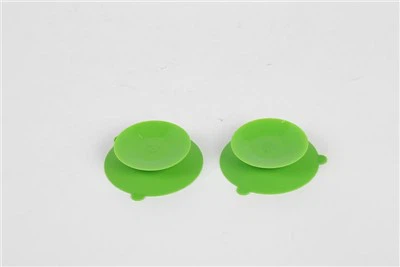


Liquid silicone rubber injection molding works by forcing low-viscosity LSR into a mold cavity, where it quickly cures into the final part shape. Here is the complete process step-by-step:
Step 1: Create LSR Molding Tool
Initially, a molding tool for liquid silicone rubber is fabricated using CNC machining. For the purpose to withstand the LSR injection molding process, this tool must possess high-temperature resistance. Also, the tool can be polished to meet different finish options. The finished molding tool is then put into an LSR-specific injection molding press.
Step 2: Prepare Material
You can prepare uncured liquid silicone in two containers connected to the pumping system. One container holds the base-forming material, whereas another container houses the catalyst, typically platinum based. Both two materials are pumped through a static mixer by a metering pump. Before the material enters the static mixer section, an additional color pigment and other additives can be added. The two compounds must be mixed in a 1 to 1 ratio.
Step 3: Inject the Material into Mold
The material is heated and injected into the mold cavity under high pressure through a nozzle. After filling the mold cavities, the material takes the shape of the molds. The mold decides the shape of the liquid silicon rubber products. Injecting the LSR mixture into the mold cavity under high pressure can ensure it fills the needed details and features.
Step 4: Curing Process
After filling the mold, it is heated to begin the curing process. This converts the liquid silicone rubber substance into a solid silicone rubber part. The size and complexity of the parts or products determine the curing time.
Step 5: Cooling and Demolding
After the LSR products have undergone sufficient cooling, they should be removed and separated from the molds. This is commonly accomplished through the utilization of automated systems. However, a worker is responsible for removing the parts in manual molding operations characterized by less sophistication and smaller production volumes. The occurrence of flashing in LSR molding is quite infrequent, mostly because of the inherent properties of LSR.
Step 6: Post-molding Secondary Operations
Post-molding secondary operations may be necessary following the demolding and parts removal process. In general, post-molding secondary operations are conducted after the completion of the molding process. Secondary operations encompass a range of jobs such as slitting, printing, marking, assembling, post-curing, etc.
Advantages of LSR Injection Molding
Injection molding is perfect for producing precise LSR parts. It provides parts with precise dimensions, intricate designs, and superior surface finishes. Below are some main benefits of LSR injection molding.
Durability
LSR molded parts have excellent UV and ozone resistance and superior electrical insulation. LSR molding is ideal for gaskets, cushioning pads in portable communications, ruggedized electronic gadgets, and various other applications.
High Precision Products
Liquid silicone molding enables the creation of complicated parts with tight tolerances. The liquid silicone substance may flow into complicated mold cavities, allowing for precise reproduction of features and dimensions.
Reduced Flash
The nature of low viscosity guarantees the liquid silicone rubber fully fills the mold cavities. LSR molding minimizes flash development. Naturally, the requirement for post-molding trimming or finishing operations is reduced.
Automated Processing
LSR molding may be manufactured automatically without any touch with the outside environment. The liquid silicone rubber substance is readily handled and injected utilizing machines, reducing the possibility of human error.
Consistent Quality
The even distribution of the liquid silicone rubber material within the mold results in consistent quality and minimum variation between individual pieces.
High-volume Production
Advanced LSR materials allow manufacturers to produce complex liquid silicone injection molded parts cost-effectively in high volumes.
Less Waste Production
Silicone molding is considered an environmentally friendly solution since it produces minimal to no waste throughout manufacturing.
Furthermore, unlike metals, which cannot be recycled, silicone may be recycled to make other items in the future.
Enhanced Safety
Because of the automation options, operators are not necessary to enter the molding area. Parts can be removed and transported from the injection molding machine using robots, chutes, or conveyor belts. This eliminates handling and the possibility of burns or other safety issues.
Injection molding of Liquid Silicone Rubber (LSR) is a process used to produce pliable, durable parts in high volumes. During the process, several components are necessary: an injector, a metering unit, a supply drum, a mixer, a nozzle, and a mold clamp, among others.
Injection molding of Liquid Silicone Rubber (LSR) is a common technology used for the production of different products for medical and electrical applications, among others. In addition to the innate properties of the material, the parameters of the process are critical too.
The first step is the preparation of the mixture. LSR usually consists of two components, pigment, and additives (fillers for example), depending on the desired properties of the final product. In this step, the ingredients of the mixture are homogenized and can be combined with the temperature stabilization system for a better control of silicone temperature (ambient temperature or silicone preheating).
The internal part of the product, called inserts, which are embedded in the silicone coating after the injection process, are placed in the mold. These inserts can be kept in ambient conditions prior to injection or preheating.
Liquid Silicone Rubbers are normally supplied in barrels. Because of their low viscosity, the material can be pumped through pipelines and tubes to vulcanization equipment.
The mold is usually heated by water flowing inside the mold or by electrical heaters. Additionally, a cold runner system can be used to prevent the premature curing of the flowing silicone in the runners or its vicinity.
In the second step, the mold is closed by a clamping machine, the injection process starts.
The injection can be made either under atmospheric pressure (an efficient ventilation system is required) or in vacuum conditions. The injection time depends on the injection pressure determined by the product to be manufactured and the silicone properties, such as viscosity. The latter depends on both the shear rate, increasing during the flow, and the temperature.
Once the mold is filled with silicone, the mold temperature is increased to accelerate the crosslinking process of the silicone rubber, resulting in the material transformation from a liquid to solid state; this step is called the curing stage. The time of the curing stage is specific for a given silicone grade and, of course, product. This is another critical step in the processing, because the material overheating and significant pressure increase inside the mold can be observed as a result of the exothermic effect of a curing reaction and high thermal expansion of silicone.
The final step of the injection molding process of silicone rubber is the cooling of the product inside the mold, followed by a product demolding and final cooling in ambient conditions.
All parameters mentioned above strongly affect the course of silicone molding. In consequence, all these aspects can be subjected to optimization to ensure the shortest production cycle time while simultaneously keeping the highest final product quality.
Liquid silicone rubber (LSR) and high consistency rubber (HCR) both support injection molding. They have similar physical properties but very different processing requirements. By understanding how LSR injection molding and HCR injection molding work, designers can specify the best manufacturing method for their silicone parts and products.
What is LSR Injection Molding?
LSR injection molding uses a base material and a catalyst, a vulcanizing agent that turns liquid silicone rubber into a solid material. Most LSRs use a platinum-based curing system where an addition reaction occurs. Heat or pressure can be applied to accelerate curing, but LSRs cure more quickly than HCRs. Yet the advantages of LSR injection molding don't end there.
Platinum or addition curing doesn't produce significant levels of byproducts, such as volatile organic compounds (VOCs), that require removal. This eliminates the need for post-baking in industrial ovens, which saves time and money during silicone parts production. If post-curing is used, it's generally to stabilize or enhance an LSR's properties for an especially demanding application.
LSR injection molding starts with meter-mixing. A pump dispenses the ingredients and a static mixer combines the components. This mixture is then transferred to a cooled section of the injection molding machine. Because the material is homogeneous, LSRs support consistency throughout individual parts and from part to part. LSR injection molding also supports automated operations for greater efficiency.
When LSR curing occurs, there's no loss of material in the feed lines for reduced material waste. Stainless steel molds are more expensive, but molds that are properly tooled produce silicone parts with minimal flash that eliminate the need for trimming. Because LSRs have a low viscosity or resistance to flow, they also support the use of complex, intricate molds in applications such as medical devices.


What is HCR Injection Molding?
HCRs are pre-mixed compounds, master batches, or partially vulcanized sheet materials with a higher viscosity index, a different curing system, and longer cure times than LSRs. Although HCRs can be injection molded, compression molding and transfer molding are often used for products other than silicone tubes and cords. Yet HCR molding offers lower design, machining, and equipment costs than the LSR process.
HCR injection molding and LSR injection molding have some similarities, but the process for high consistency rubber requires several more steps. During production, HCR silicones are fed into a heated barrel and injected into a mold where vulcanization occurs. HCR cure time is determined by parameters such as part cross-section thickness, heat transfer, and mold temperature.
Most HCRs use peroxide curing, a reaction that leaves acidic residues in the cured elastomer. If these acids aren't removed, they may produce a powder on the surface of a part that's known as "bloom". Post-curing in an oven can remove these byproducts, but post-baking adds time and money to injection molding projects. Plus, if a mold is removed before curing is complete, it's too late to remove peroxide residues.
Higher mold temperatures can reduce the time needed for peroxide curing, but there's a trade-off since these HCR parts can tear when removed from the mold. Unlike LSR injection molding, loading and de-molding is performed by an operator. Labor costs are also incurred during trimming since HCR molded parts may require surface improvements.
In liquid silicone injection molding, the mould adheres to the product, often known as the mould sticking, or the demoulding is particularly difficult and requires the use of a release agent and other physical means to help demoulding. This LSR silicone injection molding process will lead directly to low production efficiency of liquid silicone injection molding, damaging equipment and products. The silicone injection molding process quality also affects a lot on the final quality silicone products. Silicone products are stretched and deformed, and physical means are used to remove the silicone particles when they stick the mould, causing the mold to damage and damage, etc. The silicone injeciton mold lifespan will be shorten if it needs mold maintanence often.
The original traditional method:
Cleaning and sticking the mold or removing it with potion, and using potion or brush to remove the flash on the parting surface.
However, for transparent products at that time, the mold was polished to a mirror surface, and the traditional function was to scrub it bit by bit with cotton pads. , and a professional polishing master is required, otherwise the mold will be directly disassembled, and the flash on the parting surface can only be picked out bit by bit with a toothpick. The efficiency can be imagined, even if it is ordinary silicone The efficiency of product cleaning with chemicals is also low, generally taking about 30 minutes.
The use of a new fluorine nano-coating process can effectively reduce the occurrence of mold sticking:
Coating features: Anti-fingerprint, stain-resistant, easy to clean, smooth, release, wear-resistant
Uncoated mold: It is difficult to take off during molding, cannot be taken off, and is easy to get stuck. The product scrap rate is high due to mucous membrane, erosion, and corrosion during the die-casting process. Or during stamping and forming processing, the mold is often damaged due to wear. , sticking, bite, fatigue fracture and other factors lead to low production efficiency.
Coated mold: Easy to clean, smooth, good release property, completely solves the problem of mucous membrane in the die-casting process in hydrophobic and oleophobic state, does not get stuck, and improves production yield rate.
For the touch: Rubber mold, liquid silicone mold, self-adhesive silicone, the mold is made of stainless steel.
Processing process: The processing speed is fast and the efficiency is high. The full coating process can be completed within 1-3 days.
Our Factory
SJ Group was established in 1987, Hongkong. SJ Group starts from precision automotive mold building, and step into packaging mold building, medical mold building, liquid silicone rubber mold building, precision part injection. After 30 years of development, now we have 6 subsidiaries, several overseas after-sale offices. SJ Group is a group company integrating with part research, manufacturing, After Sales Service, and technical support. The major business of SJ Group: precision injection molds for automotive, packaging, medical and liquid silicone rubber.


FAQ
We're professional LSR injection molding manufacturers and suppliers in China, specialized in providing high quality customized products. We warmly welcome you to buy high-grade LSR injection molding made in China here from our factory.
