

About SJ Group
SJ Group is a group company integrating with part research, manufacturing, After Sales Service and technical support.
Why Choose Us
High Precision Equipment
SJ Group is a group company integrating with part research, manufacturing, After Sales Service and technical support.
High Quality Products
Automotive molds, Medical molds, Packaging molds, Liquid Silicone Rubber molds, Precision Injection molding.
High-Efficiency Communication
Efficient feedback is a commitment and attitude to our customers.
Good service
Providing technical support, troubleshooting, and maintenance services.
-
![Injection Molded Plastic Automotive Parts Mold]()
Injection Molded Plastic Automotive Parts Mold
Add to Inquiry -
![Automotive Reflector Mold And metailisation Solution]()
Automotive Reflector Mold And metailisation Solution
Add to Inquiry -
![Customized Solutions for Automotive Industries Manufacturer]()
Customized Solutions for Automotive Industries Manufacturer
Add to Inquiry -
![Vehicle Insert Overmolding]() Add to Inquiry
Add to Inquiry -
![Precision Mold]() Add to Inquiry
Add to Inquiry -
![Moldmakers]() Add to Inquiry
Add to Inquiry -
![Plastic Mould Cost]() Add to Inquiry
Add to Inquiry -
![Injection Plastic Parts]() Add to Inquiry
Add to Inquiry -
![2k Injection]() Add to Inquiry
Add to Inquiry -
![Automotive Exterior Large Plastics Part]()
Automotive Exterior Large Plastics Part
Add to Inquiry -
![Injection Moulding Tool Makers]()
Injection Moulding Tool Makers
Add to Inquiry -
![High Quality Injection Molding]()
High Quality Injection Molding
Add to Inquiry
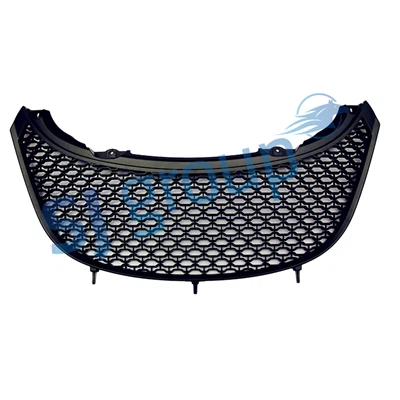
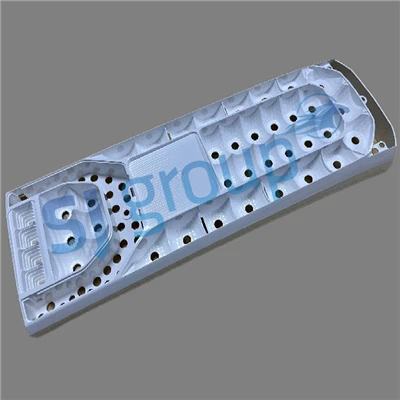
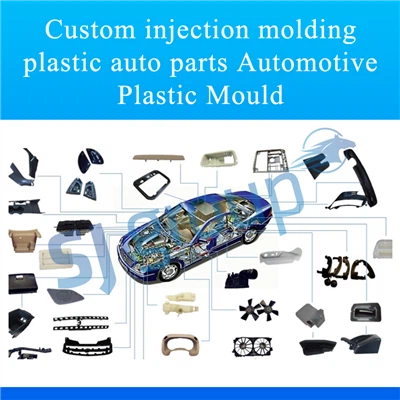


An automotive injection mold is a specialized tool used to manufacture plastic components for vehicles. It's designed to produce various parts like interior trim, body panels, and dashboard elements through the injection molding process. These molds are made with precision from durable materials to meet the automotive industry's strict standards. They enable efficient mass production of high-quality automotive parts, contributing to the manufacturing of reliable and aesthetically pleasing vehicles.
Advantages of Injection Moulding For Automotive Applications
Though the mould design process is critical and challenging (a poorly designed mould can result in defects), injection moulding itself is a reliable method for producing solid plastic parts with a high-quality finish. Here are a few reasons why the process is beneficial for automotive plastic parts production:
Wide Selection of Materials
Automotive injection molding offers a wide range of materials for a wide range of applications, from thermoplastic materials such as polypropylene, nylon, and ABS, to elastomeric materials like rubber and silicone, and thermosetting materials such as epoxy and polyester.
Rapid Prototyping with Rapid Tooling
Rapid prototyping via rapid tooling offers a significant benefit by enabling automotive manufacturers to prototype using production-intent materials, a capability that other rapid prototyping processes like 3D printing and CNC cannot provide. It also allows designers and engineers to quickly iterate and test designs before full-scale production in a cost-effective manner, thereby improving speed to market.
Replacing Heavy Metal Parts Through Overmoulding
Overmoulding is a process in injection moulding where a substrate or pre-molded part is combined with additional materials to create a final product. The automotive industry is increasingly turning to overmoulding to replace traditional heavy metal parts with more lightweight and cost-effective alternatives for improved fuel efficiency and overall vehicle performance. From car handles, steering wheel elements, to foot pedals, components traditionally composed of heavy metals can now be reinvented with overmoulding.
Delivering Critical and Repeatable Parts
Plastic injection moulding contributes to the production of critical components such as electrical housings, engine components and various other structural components that are integral to the performance, safety, and overall functionality of automobiles. It is also a highly repeatable process that delivers consistent results from part to part, ensuring the production of high-performance vehicles.
Meeting Aesthetic Expectations
Automotive injection moulding plays a crucial role in meeting aesthetic expectations within the automotive industry. From sleek interior elements, such as dashboard panels and trim pieces, to the exterior features like grilles and body panels, injection moulding enables the creation of parts with smooth finishes, intricate details, and diverse textures, (e.g., glossy, rough, or matte). Unlike other manufacturing techniques, these textures are applied directly to the mould rather than to the moulded part.
Plastic injection moulding also allows for custom colour matching by mixing dyes with the raw material pellets before manufacturing begins. This produces a solid, consistent colouring after moulding complete, without the need for painting or tinting. All in all, the nature of the process ensures precise and consistent production of automotive components.
Automotive injection moulding applications
From interior to exterior, under-the-hood to lighting, automotive injection moulding plays a pivotal role in shaping the modern vehicle.
Interior Components - manufacturers also produce many automotive interior parts using automotive plastic injection moulding. They include instrumentation components, interior surfaces, dashboard faceplates, door handles, glove compartments, air vents, and more. In addition, they also use injection moulding to produce decorative plastic elements.
Under-the-Hood Components - over the past two decades or so, manufacturers have transitioned to plastics for many under-the-hood components that were previously made from metal.
Exterior Components - injection moulding is an established process for many exterior automotive components, including fenders, grilles, bumpers, door panels, floor rails, light housings, and more. Splash guards are a fine example for demonstrating the durability of injection molded parts. In addition, the components, which protect the car from road debris and minimize splashing, are often made from rubber or other durable and flexible materials.
Why use plastic injection moulding?
Automotive plastics are made from a wide range of plastics and polymers, each one suited perfectly for the application of the part being created. The ability to produce incredibly accurate components in large numbers is why the process is so popular for both mass-produced and custom-built vehicles. In the past, car parts were mainly made from metal. This made them heavy, cumbersome and prone to rust. Plastics started to appear in the 1940s and 1950s. They made up lots of decorative elements and car trim pieces in the 1970s. However, they didn't become totally mainstream in automotive production until the 1980s. This was when more functional components started, such as plastic headlights, fenders and bumpers.
Now, the automotive plastics reach has extended to full body parts and vehicle interior and exterior structural components. Again, these are more light weighting than metal. This helps fuel efficiency and boosts the vehicle's performance. They are often cheaper to manufacture and has impact resistance.
Advantages to automotive plastics moulding
The process can produce highly accurate components through the plastic injection moulding technique. Moulds can be created to meet exact specifications, even for short production runs. They can create very intricate designs and high-quality finishes. It is easy to spot defects in plastic injection moulded parts and correct them with a revised mould.


What process does automotive plastics moulding involve?
Plastic injection moulding is a relatively straightforward process. After receiving the client's brief and specifications, the mould design is created, tweaked and approved. A 3D prototype of the desired part is then produced to ensure accuracy and quality. This is revised and updated as required until the part is ready to go into the main production stages. The materials that will be used are then chosen, with advice and recommendations provided along the way.
The client's component(s) is then produced to the required quantity, colour shape and finish using the plastic injection moulding machines. Then, it is tested and assessed for performance and quality control before being presented to the client. Reputable companies will adhere to ISO 9001 and Health and Safety compliance as well as other relevant industry quality standards. Finally, the moulds and designs are logged in case of repeat business further down the line.
What are automotive plastics used for?
Automotive manufacturing such as cars, vans and other vehicles use plastics components in a number of places. Under the bonnet, they are used for cylinder head covers, battery casings and oil gauges. Car interior are made of up automotive plastics. Outside the car, they can be found in fenders, bumpers and headlight casings. Other external parts include door panels, handles and grills.
Meanwhile, there are other plastic injection moulded components inside the car. These include dashboard plates, dials, air vents, door handles, glove boxes, radios, sat nav screens and sun visors. Some plastics can be utilised in foam seating pads. Plastics can also be used to add decorative elements to the car to enhance its design.
Since automotive manufacturers produce a variety of parts from automotive plastic injection molding, not a single material is suitable for each kind of application. Therefore, different plastic polymers are used for auto parts.
Here's a list of the plastic materials the manufacturers utilize to make car parts.
Polypropylene (PP)
Polypropylene, a polymer of propylene, is one of the common materials used in making car parts. Due to its resistance to chemicals, UV, and water, it is widely used in making car's external components such as bumpers. In addition, it is used for cable insulation.
Polyvinyl Chloride (PVC)
PVC makes about 16% of the car's plastic components. Being flexible and heat resistant, auto parts manufacturers use it to make both hard and soft parts, including interior panels, and dashboard components.
Polyurethane (PU)
Products that require a high degree of flexibility, such as foam seats, frequently make use of Polyurethane. Car seats are one example. PU is also used for making seals and gaskets, insulation panels, and suspension bushings in automobiles.
Polycarbonate
Polycarbonate is a rigid, hard, and durable material. Due to its resistance to heat and weather conditions, it is an excellent choice for making car bumpers.
Polyamide (Nylon)
Polyamide or Nylon being wear-resistant in nature is used to design bushes and bearings.
Acrylonitrile butadiene styrene (ABS)
ABS, as its names suggest, it's a polymer of acrylonitrile and styrene. It is hard and shiny, which is why its normal applications include dashboards and wheel covers.
Polymethyl methacrylate (PMMA) / Acrylic)
Acrylic is transparent plastic with high strength, optical clarity, and stiffness. It is used as a substitute for glass and in making headlight covers and screens.
Polyethylene
Polyethylene is strong, lightweight, and resistant to impact. It's extremely helpful in case moisture resistance and low cost are the main priorities.
Types of Injection Molding Techniques Used in the Automotive Industry
In the automotive industry, we will normally find three main types of injection molding techniques, namely thermoplastic injection molding, elastomeric injection molding, and thermosetting injection molding.
Thermoplastic Injection Molding
Thermoplastic injection molding is the most common type of injection molding in the automotive industry. It is used to produce parts made from thermoplastic materials, such as polypropylene, nylon, and ABS.
This auto molding technique offers many advantages over other types of injection molding, including its low cost, high production speed, and versatility.
Elastomeric Injection Molding
Elastomeric injection molding is used to produce parts made from elastomeric materials, such as rubber and silicone. It offers many of the same advantages as thermoplastic injection molding, including its low cost, high production speed, and versatility. Additionally, it provides superior shock absorption and vibration dampening.
Thermosetting Injection Molding
Thermosetting injection molding is used to produce parts made from thermosetting materials, such as epoxy and polyester. This car molding technique offers many of the same advantages as thermoplastic molding, including its accurate dimensional tolerances and repeatability. However, it has a few advantages over thermoplastic molding, as well.
Additionally, it is not susceptible to melting or deforming at high temperatures; the main reason why automotive manufacturers choose thermosetting injection molding.
Automotive Injection Mold: Enhancing Durability And Aesthetics
Injection molding provides essential capabilities for the design, engineering, and manufacturing of today's automobiles. This versatile process contributes components enhancing vehicle performance, safety, comfort, and aesthetics.
Injection molding's expanding role in automotive manufacturing. We'll survey its specialized applications in both visible styling features and fundamental underlying components.
Engineered for Automotive Demands
Automotive manufacturing applies tremendous pressures on components to withstand years of service in challenging environments. Parts must exhibit:
Durability at temperature extremes
Dimensional stability from -40F to over 200F
Strength, stiffness, and impact resistance
Resistance to fuels, oils, and chemicals
Retention of properties after extended use
Consistency and precision over millions of cycles
Automotive-grade injection molding processes and materials are engineered to satisfy these stringent requirements.
Strength, Precision, and Reliability
Under-the-hood components produced through injection molding include:
Coolant system components
Fuel system manifolds, flanges, seals
Air intake manifolds and throttle bodies
Sensors, actuators, connectors
Pulleys, gears, bushings
Materials like nylon, acetal, PBT, LCP, PPS, and other engineering resins provide the necessary mechanical performance specifications.
Precision tooling and process controls ensure dimensional accuracy and repeatability from the first to the millionth shot. Automation provides unmanned high-volume production to meet demand.
Lightweighting for Efficiency
Replacing metal components with injection molded plastics contributes to vehicle lightweighting efforts. Advantages include:
Lower mass for better fuel economy
High strength-to-weight ratios
Parts consolidation by integrating components
Corrosion resistance eliminating steel replacements
Thin-wall molding, gas-assisted molding, and structural ribbing produce exceptionally stiff, robust components at lower overall weight.
Safety and Impact Resistance
Injection molded parts contribute to passenger safety:
Airbag housings protect occupants in collisions
Energy-absorbing front ends manage crash forces
Reinforced doors maintain integrity in rollovers
Seatbelt restraint systems
Headlamp assemblies illuminate the roadway
Bumpers molded from engineered thermoplastics flex and rebound from impacts while protecting vulnerable components behind.
Customizable Interior Aesthetics
Injection molding grants automotive designers exceptional flexibility to customize visible interior components for unique styling, textures, and ambient lighting effects.
Molded-in Colors
Colored plastic resins integrate aesthetics directly into parts. Multiple injections with clear and tinted resins produce striking two-tone effects. Metallic, pearlescent, and color-shifting pigments add interest. In-mold decorating and adapted IML techniques allow patterns, gradients, and images to become embedded in surfaces. This molded-in color eliminates painting steps while enhancing scratch resistance.
Decorating Techniques
Post-molding secondary processes open many doors for interior decoration:
Painting, airbrushing, hydrographics for any color and effects
Laser etching, texturing, embossing provide tactile interest
Pad printing, heat transfers apply graphics and patterns
Chrome plating, vacuum metallization yield chrome and metal finishes
Backlighting panels, precision light guides create ambient effects
Decorating personalizes components to match the style of vehicle interiors from classic luxury to sporty and futuristic.
Soft-Touch Overmolding
For armrests, door inserts, and other touchpoints, overmolding adds thermoplastic elastomers and other soft-touch resins onto rigid substrates. This achieves rubberized surfaces and cushioning with perfect adhesion and dimensional stability. Multi-shot injection molds co-mold the hard and soft materials into a unified part in a single process.
Our Factory
SJ Group was established in 1987, Hongkong. SJ Group starts from precision automotive mold building, and step into packaging mold building, medical mold building, liquid silicone rubber mold building, precision part injection. After 30 years of development, now we have 6 subsidiaries, several overseas after-sale offices. SJ Group is a group company integrating with part research, manufacturing, After Sales Service, and technical support. The major business of SJ Group: precision injection molds for automotive, packaging, medical and liquid silicone rubber.


FAQ
We're professional automotive injection mold manufacturers and suppliers in China, specialized in providing high quality customized products. We warmly welcome you to buy high-grade automotive injection mold made in China here from our factory.
