

About SJ Group
SJ Group is a group company integrating with part research, manufacturing, After Sales Service and technical support.
Why Choose Us
High Precision Equipment
SJ Group is a group company integrating with part research, manufacturing, After Sales Service and technical support.
High Quality Products
Automotive molds, Medical molds, Packaging molds, Liquid Silicone Rubber molds, Precision Injection molding.
High-Efficiency Communication
Efficient feedback is a commitment and attitude to our customers.
Good service
Providing technical support, troubleshooting, and maintenance services.
-
![medical injection moulding]() Add to Inquiry
Add to Inquiry -
![Plastic Tooling For Injection]() Add to Inquiry
Add to Inquiry -
![Precision Mold Making]() Add to Inquiry
Add to Inquiry -
![Two Shot Moulding]() Add to Inquiry
Add to Inquiry -
![Plastic Injection Molding Medical Parts]()
Plastic Injection Molding Medical Parts
Add to Inquiry -
![Medical T-branch Connectors]() Add to Inquiry
Add to Inquiry -
![Catheter Conveyor for Abbot]() Add to Inquiry
Add to Inquiry -
![Microfluidic Chip Plastic Moulding]()
Microfluidic Chip Plastic Moulding
Add to Inquiry


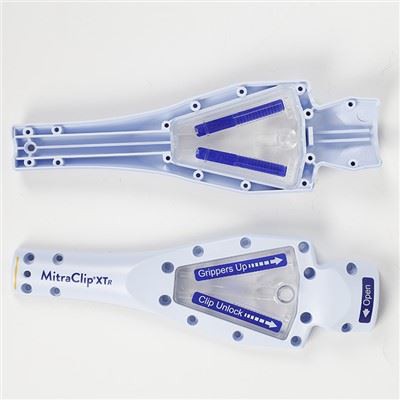
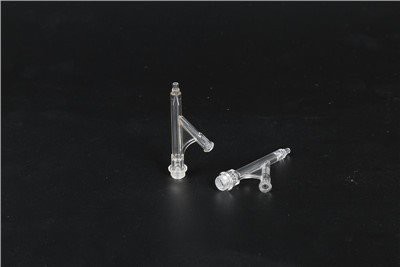


Medical plastic injection molding is a process that uses melted medical-grade plastics to create the desired shape of medical devices. The process involves melting the plastic, injecting it into a mold, cooling it, and then ejecting the finished product. Injection molding is an efficient and cost-effective method that produces parts with high levels of precision, accuracy, and quality. It's also compatible with many medical-grade plastics and can produce large quantities of accurate parts.
Advantages of Plastic Injection Molding For Medical Applications
Plastic injection molding offers many benefits for medical applications, making it the preferred manufacturing method for producing medical devices and equipment. Here are some of the key advantages:
Precision and Complexity
Plastic injection molding is a highly efficient process for producing intricate and complex medical components with exceptional precision. By using accurately designed molds, the manufacturing of medical devices can achieve tight tolerances and intricate geometries while ensuring adherence to exact specifications.
Consistency and Quality
The injection molding process ensures an exceptional level of consistency in the final products. Each molded part exhibits near-perfect similarity, thereby minimizing variations and mitigating the risk of defects. This unwavering consistency proves to be crucial, particularly in medical applications where precision and utmost quality play a pivotal role in ensuring patient safety and reliable performance.
Rapid Prototyping and Faster Time-to-Market
Plastic injection molding simplifies the process of creating prototypes, allowing medical professionals and manufacturers to swiftly refine their designs. This speeds up the development cycle, resulting in quicker market entry for new medical devices and equipment.
Cost-effectiveness for Mass Production
Once the initial mold is created, producing medical devices in large quantities significantly reduces the cost per part. This cost-effectiveness has numerous advantages for both healthcare providers and patients as it enhances accessibility and affordability of these devices.
Versatility of Materials
Plastic injection molding supports a wide range of medical-grade plastics, each with unique properties suitable for various medical applications. These materials offer tailored solutions to cater to different medical needs, ranging from biocompatible options for implants to transparent plastics used in medical packaging and durable polymers utilized in surgical tools. The versatility of the materials enables healthcare professionals to address specific requirements effectively.
Biocompatibility and Sterilization
Many plastics used in medical-grade injection molding are designed to be compatible with the human body, ensuring safety. Additionally, these materials can withstand various sterilization processes without compromising their properties. This guarantees that medical devices remain hygienic and safe for patient use.
Reduced Assembly and Secondary Operations
Injection molding often produces fully formed parts without needing additional assembly or secondary operations. This streamlined manufacturing process minimizes the risk of contamination and human error during assembly, making it more efficient and reliable.
Design Flexibility
Plastic injection molding provides design flexibility, enabling medical professionals and engineers to develop innovative and user-friendly medical devices. By incorporating textured surfaces, grips, and multi-component assemblies, it enhances the usability and performance of medical products.
Plastic injection molding is used in many different applications within the medical industry. Examples include enclosures for medical equipment, the overmolding of surgical tools, and spinal implants. Designers have a choice of materials, but the selected plastic must meet the application's requirements. For example, plastics that will be sterilized with steam need to resist high temperatures and moisture, while those that will come into contact with patients must be biocompatible, meaning that they're not harmful to living tissue.
Importance of Standards in the Medical Industry
Industry standards play an important role in the design and manufacture of medical products, especially medical devices. For designers, these standards help ensure that patients, the end-users of injection molded products, are not exposed to excessive risks during medical treatment. So injection molders must implement stringent processes and procedures to control all stages of production and comply with standards.
Medical Device Classes
Medical devices are classified according to their potential for causing harm to patients, the general public, or to other personnel who use or operate the medical device. This classification determines the degree of required regulatory oversight.
The U.S. FDA (Food and Drug Administration), and the EU MDR (Medical Device Regulation) both divide medical devices into three classifications, where Class I refers to the lowest-risk medical devices and Class III refers to the highest-risk. The EU MDR further breaks down Class II devices into two subcategories: IIa and IIb.
Class I medical devices are not intended to support or sustain life and will not present an unreasonable risk of illness or injury to a patient. Examples include wheelchairs, glasses, hospital beds, and test tubes.
Class II encompasses any medical device for which general controls are deemed insufficient to provide reasonable safety and effectiveness. Examples include contact lenses, syringes, and pregnancy tests. The EU MDR adds two subcategories:
Class IIa refers to devices that present a medium risk.
Class IIb refers to devices that pose a high risk.
Class III medical devices are usually designed to sustain or support life and may present an unreasonable risk of injury or illness. Examples include pacemakers, defibrillators, and implanted prostheses.


Common Medical Injection Molding Standards
The medical device industry is tightly controlled to ensure patient safety. Listed below are some of the common standards that affect manufacturing, including plastic injection molding.
ISO 13485 – Medical Devices
ISO 10993 – Biological Evaluation of Medical Devices
ISO 14644 – Cleanrooms & Associated Controlled Environments
ISO 13485 – Medical Devices
ISO 13485 outlines the requirements for a quality management system (QMS) when producing medical-grade products. It is the most common standard used in medical device manufacturing. ISO 13485 is not limited to plastic injection molding but rather covers the general requirements for all manufacturing technologies that are used to produce medical equipment. This standard was developed to ensure that consistent quality is maintained and that medical devices and equipment are produced in a safe and effective manner.
To achieve these goals, ISO 13485 outlines processes and procedures to manage risk and regulatory compliance while providing mechanisms to continuously improve the QMS whenever a gap or potential for improved performance is noted. The standard defines best practices for documentation, training, traceability, research and design, production, and how to handle non-conformances. For both the part designer and the injection molders, there are well-defined responsibilities.
The QSR (Quality System Regulations), also referred to as 21 CFR part 820, as outlined by the FDA, has many parallels with ISO 13485. In the United States, the QSR may be used as a supplement or replacement for the ISO 13485 standard.
Plastic medical products have revolutionized and improved the quality of patient management globally, but not all materials are created equal. Choosing suitable plastic materials for your medical device manufacturing is essential, as it impacts the success and safety of your final product.
Join us as we explore different types of medical-grade plastics and the critical factors in injection molding material selection.
The importance of materials in medical applications
With the rapid advancements in healthcare, plastic has emerged as the favored material for prototyping crucial medical components:
The material's inherent versatility, durability, and resistance are ideal for crafting medical devices and pharmaceutical packaging.
Plastic's unique compatibility with imaging technologies allows for accurate diagnostics.
Devices made from medical-grade plastic offer abrasion resistance and are easily sterilized, reducing the risk of contamination or infection.
Plastic is adaptable, ensuring that devices meet evolving healthcare needs and empowering the creation of cutting-edge equipment with enhanced capabilities.
Medical-grade plastic material is accessible and cost-effective, enabling large-scale production to address healthcare shortages.
Different types of medical-grade plastics
Plastics, also known as polymers, consist of repeating monomers forming homopolymers or copolymers. These materials are arranged into linear or branched polymers, resulting in diverse plastics with unique features.
Medical injection molding utilizes various types of plastic materials. Thermoplastics and thermosetting materials are prominent in this field. Thermosetting plastics have high melting points, chemical resistance, and mechanical strength due to the strong covalent bonds between polymer strands. However, these covalent linkages cannot reform once broken, resulting in permanent deformation. These properties make thermosetting plastics useful as adhesives and protective coatings.
Thermoplastics also feature weaker intermolecular forces, allowing them to melt and reform multiple times without permanent alteration. The material's versatility and ability to withstand the remolding processes make it ideal for medical device plastic injection molding.
Some notable thermoplastics you may encounter in your injection molding journey include the following.
Polyethylene (PE)
PE consists of ethylene monomer units linked through addition polymerization. Its variants offer distinct mechanical properties suited for various applications:
HDPE (high-density polyethylene): Moisture-resistant and rigid, ideal for solid pharmaceutical products
LDPE (low-density polyethylene):A flexible and translucent plastic used in squeezable bottles and medical tubing
UHMW (ultrahigh molecular weight):Renowned for high-performance applications like orthopedic implants due to wear resistance
Polypropylene (PP)
Polypropylene is derived from substituting the ethylene monomer with a methyl group (CH3). It is harder than PE and offers better resistance to moisture and gases, so it's suitable for storing fluid drugs. PP is also autoclavable and chemically robust, expanding its utility for storing sterile drug products.
Polystyrene (PS)
This polymer emerges from substituting the hydrogen in PE with a benzene ring. PS has two main forms:
An opaque impact-absorbing foam with excellent dimensional stability and impact strength, utilized in food and vaccine packaging
Transparent crystal PS, found in disposable cups and plastic jars
Polyvinyl Chloride (PVC)
PVC is derived from substituting a hydrogen atom with chlorine in the ethylene monomers, which reduces its reactivity to nonpolar liquids. It is also transparent and flexible, making it a strong choice for storing glucose and saline solutions.
Polychlorotrifluoroethylene (PCTFE)
PCTFE is derived from replacing all remaining hydrogen atoms on the monomers with fluorine. The resulting material is ideal for pharmaceutical packaging thanks to its excellent strength, impact resistance, and moisture resistance.
Polyetheretherketone (PEEK)
PEEK is celebrated for its unique biomimetic qualities and fatigue resistance. It's commonly used for orthopedic implants and prosthetics.
Medical Injection Molding: Optimizing Medical Device Production for Better Care
What is the Role of Medical Injection Molding in Healthcare?
Medical injection molding has revolutionized the healthcare industry by providing a fast, efficient, and reliable method for producing intricate medical devices and equipment. This process, which involves injecting molten materials into a mold to create parts of various shapes and sizes, is relied upon heavily by the medical sector.
From surgical instruments to prosthesis components, medical injection molding has a wide range of applications. Its high degree of accuracy makes it an ideal method for creating intricate products with tight tolerances, which are often required in the medical field.
The influence of medical injection molding extends to patient care as well. By offering a way to produce affordable and high-quality medical equipment, it allows medical institutions to deliver better quality care. This goes to show that the role of medical injection molding extends beyond just manufacturing – it has a direct impact on the lives of patients.
The Impact of Medical Injection Molding on Patient Care
The influence of medical injection molding on patient care is profound. As a process that allows precision, consistency, and cost effectiveness in the creation of medical devices, it directly affects the quality of treatment patients receive.
Complex devices and equipment manufactured through this process play a pivotal role in diagnosing, treating, and managing a wide range of health issues. From insulin pens for diabetes to implants for joint replacements, these items directly impact the lives of patients, offering them better and often, more comfortable treatment options.
Furthermore, the durability and reliability of these devices are crucial. Patients can depend on the safety and performance of these products, as they're made to strict quality standards. This reliability brings peace of mind to both patients and healthcare professionals, knowing that the devices will perform as expected without failure.
Precision and Efficiency: The Hallmarks of Medical Injection Molding
One of the key attributes of medical injection molding is its ability to create highly precise and detailed components efficiently. The method is capable of manufacturing highly complex parts that could be beyond the scope of other techniques. This precision is integral in medical applications, where even the smallest deviation can have significant consequences.
The process functions by injecting material into a meticulously crafted mold, which allows every minute detail to be accurately captured in the finished product. This high precision, coupled with the process's repeatability, ensures a consistent level of quality across large production volumes – an essential factor for medical products where each part must meet critical safety and functionality requirements.
The efficiency in medical injection molding also lies in its high volume production capability. Once the initial setup is completed, the process can produce a vast number of parts quickly, making it exceedingly cost-efficient for large production runs. Additionally, advancements in automation have further streamlined the process, reducing manual intervention and increasing productivity.
In essence, the inherent precision and efficiency of medical injection molding have made it a cornerstone in the production of medical devices, offering unrivaled capabilities in the manufacture of life-changing, and life-saving, medical products.
Quality Control in Medical Injection Molding Operations
Quality control is indispensable in medical injection molding operations. Given the critical nature of medical devices and the strict industry regulations, ensuring products are of the highest quality is paramount.
Quality control in medical injection molding encompasses a variety of practices. It begins with the inspection of raw materials to ensure they meet necessary medical standards, including biocompatibility and sterilization requirements. The design and manufacturing of the molds themselves are also subject to intensive scrutiny, as a single flaw can lead to a whole batch of faulty parts.
Moreover, the production process is monitored to comply with predefined parameters such as temperature, pressure, and cycle time that ensure each part is formed correctly. Advanced technologies, such as machine vision systems and automated measuring instruments, are used for real-time quality checks.
Upon production, a range of tests are performed on the parts, including dimensional analysis, strength testing, and in some cases, biocompatibility testing. The goal is to ensure every single piece coming off the production line meets the rigorous standards set by both the company and regulatory agencies.
Complying with Regulatory Frameworks in Medical Injection Molding
The medical field is one of the most heavily regulated industries worldwide, and rightly so given that patient safety and health are at stake. Medical injection molding operations must strictly comply with a multitude of regulations to ensure that products are safe, effective, and of the highest quality.
Regulations concerning medical injection molding revolve around materials, manufacturing processes, hygiene, and product testing. Standards imposed by the Food and Drug Administration (FDA) in the United States and the European Medicines Agency (EMA) in the EU are particularly influential.
Medical Injection Molding: The Evolution Over the Years
The field of medical injection molding has witnessed significant developments over the years. From the early materials and primitive machines to today's sophisticated polymers, high-precision equipment, and stringent quality control, this industry has constantly evolved to meet the dynamic needs of modern healthcare.
Initially, the process and materials used were quite basic, primarily focusing on mass production of simple parts. However, as the medical field advanced, the demand grew for complex parts, stringent safety, and high precision. This drove the need for sophisticated tools, advanced materials, and rigorous quality management systems.
Our Factory
SJ Group was established in 1987, Hongkong. SJ Group starts from precision automotive mold building, and step into packaging mold building, medical mold building, liquid silicone rubber mold building, precision part injection. After 30 years of development, now we have 6 subsidiaries, several overseas after-sale offices. SJ Group is a group company integrating with part research, manufacturing, After Sales Service, and technical support. The major business of SJ Group: precision injection molds for automotive, packaging, medical and liquid silicone rubber.


FAQ
We're professional medical plastic injection molding manufacturers and suppliers in China, specialized in providing high quality customized products. We warmly welcome you to buy high-grade medical plastic injection molding made in China here from our factory.
